

Lying to make life "easier"
The Paris Peace Accords of January 27, 1973 were not about peace

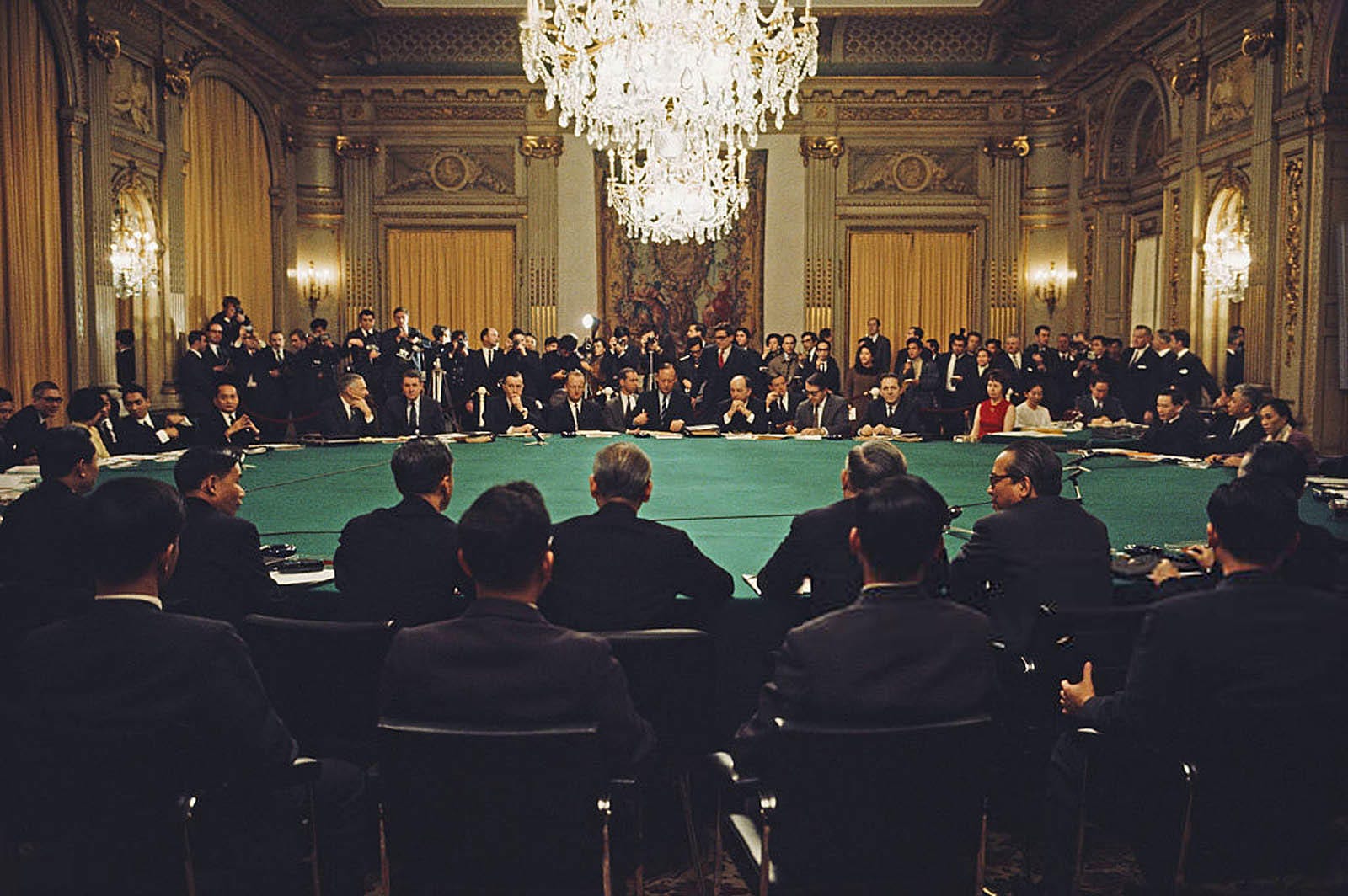
Author’s note: this post was previously published in 2024. I’m sharing it again to highlight the anniversary of the signing of the Paris Peace Accords in 1973.
“I’m lying to make my life easier,” a fifth grader said to me yesterday. He wanted me to think him sincere, but his clenched fists and cheeks the color of raw meat told another story. Those clues and the fact that I was chaperoning him during an in-school suspension told a vast truth underlying his statement.
I wonder sometimes if the same rationalization ever went through National Security Advisor Henry Kissinger’s head as he bushwacked the cratered path to the 1973 Paris Peace Accords.
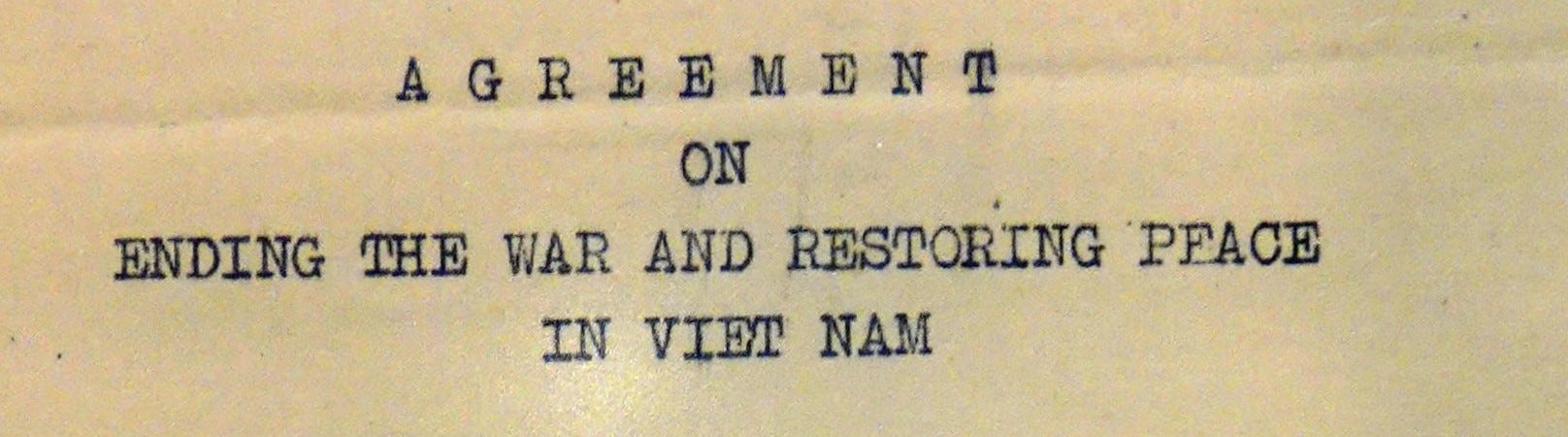
Officially titled the “Agreement on Ending the War and Restoring Peace in Viet Nam,” the many-times-revised document was not so much an agreement as a lie.
But it was making some lives easier. At least for a time.
For Kissinger and President Richard Nixon, it provided the illusion of control and the appearance of an honorable exit.
For American families—especially those whose loved ones were POWs—it provided the relief that their fathers, sons, brothers, lovers would soon be home to stay. This was, of course, no small thing and, possibly, the one good and great result of this negotiation.
For my family and the other Americans who remained involved in the everyday life of the Vietnamese, however, the “decent interval” offered by the Accords was a clinging burr.
The summer before the Paris summit, my father, a CIA officer in the psychological warfare department, was reassigned from “his long-standing Korean broadcast” to Saigon, where he would head up a radio program aimed at mellowing out the North Vietnamese Army’s aggression. (Somewhat akin to World War II’s Tokyo Rose program.)
In November of 1972, even as Kissinger was doing his black magic behind the scenes, he wrote to my mother’s parents:
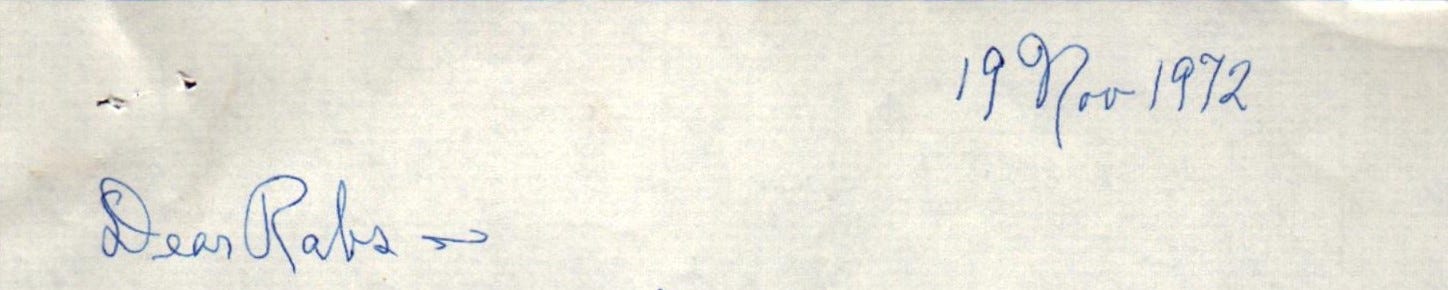
The commies are really something. By every measure of military and political warfare, they have lost, but they keep on talking as if they had won. Well, Peking and Moscow appear to realize they have had it and I hope Henry the K pushes them to the wall in Paris.

He finished the letter with a heartfelt wish:
I hope we will not have to pull stakes right soon since Nancy and the kids are happy and not even really settled [in Taiwan] yet.
At the time of his reassignment, we were not allowed to reside in Vietnam, and my mother was very happy to land near Taipei, where we already had many American friends.
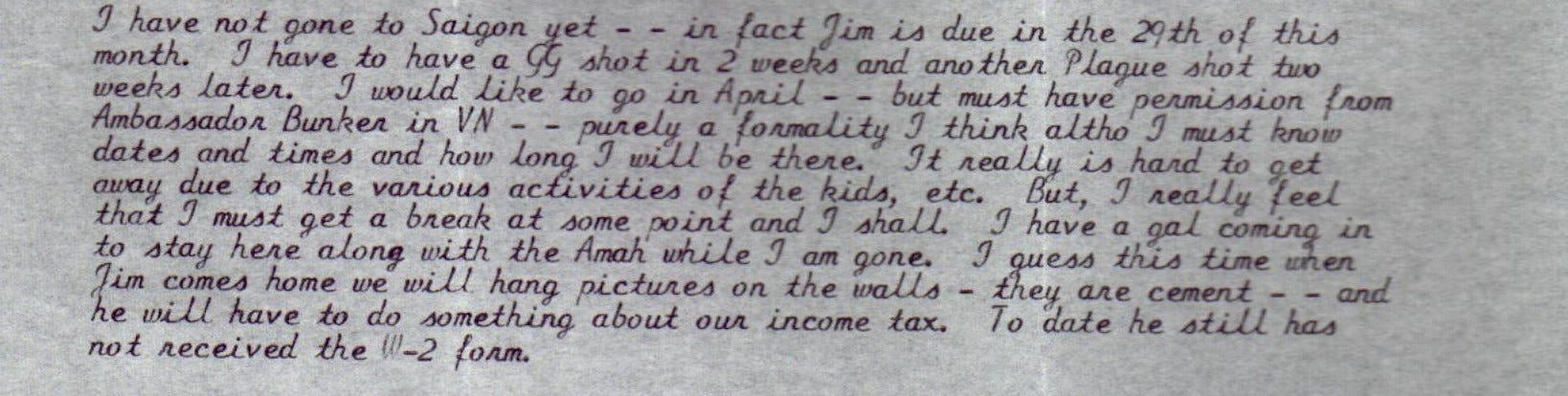
In March 1973, just two months after the accords, she wrote home with no mention of anything political, except that she hoped to visit my father soon, but had to apply to the embassy to enter.
I would like to go [to Saigon] to visit in April, but I must have permission from Ambassador Bunker in VN. Purely a formality, I think . . .
In Karen Kaiser’s memoir, Gardens in the Midst of War, she recounts a dinner party conversation in July 1973 in which the electricity goes out—yet again—and the candle-lit conversation turns to talk of the ongoing fighting.
One guest says:
“I heard the explosions, too,” said Lawes. “Seemed close . . . Wasn’t the Paris Peace Agreement supposed to end all this?”
Indeed.
When my family arrived a year later in July of 1974, wide-eyed and eager to be reunited with my father, the same question would linger over our ten months there:
Where was the provision for peace that guaranteed us safety
and was meant to make our lives “easier?”
What’s your understanding of the January 27, 1973, Paris Peace Accords? I hope you’ll leave a comment and let me know.
About Kat Fitzpatrick, M.F.A.
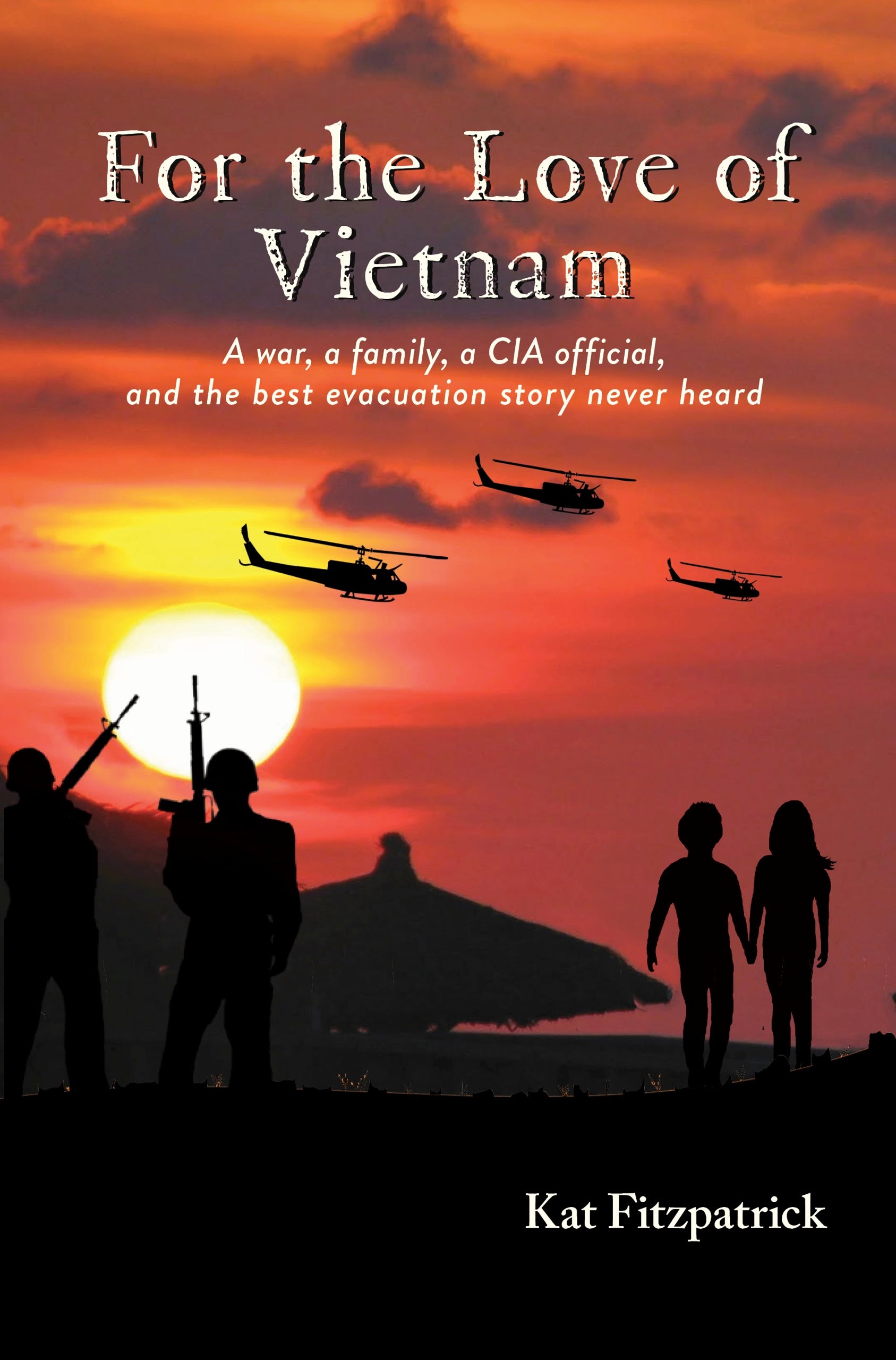
I am the author of the nonfiction book, For the Love of Vietnam: a war, a family, a CIA official, and the best evacuation story ever heard, which combines the history of the Vietnam War with tales from my family’s lives including how we resided in Saigon in 1974-75 as the North Vietnamese Army was making its way toward the city, and how, at the eleventh hour, my father, a CIA official, coordinated the rescue of over 1,000 South Vietnamese—the staff and families of “House Seven.”
I continue to publish current and retrospective “Stories of Vietnam” here on Substack, adding layers to my own stories as well as featuring other voices, including those of Vietnam veterans and Vietnam refugees.
Do you have a book club?
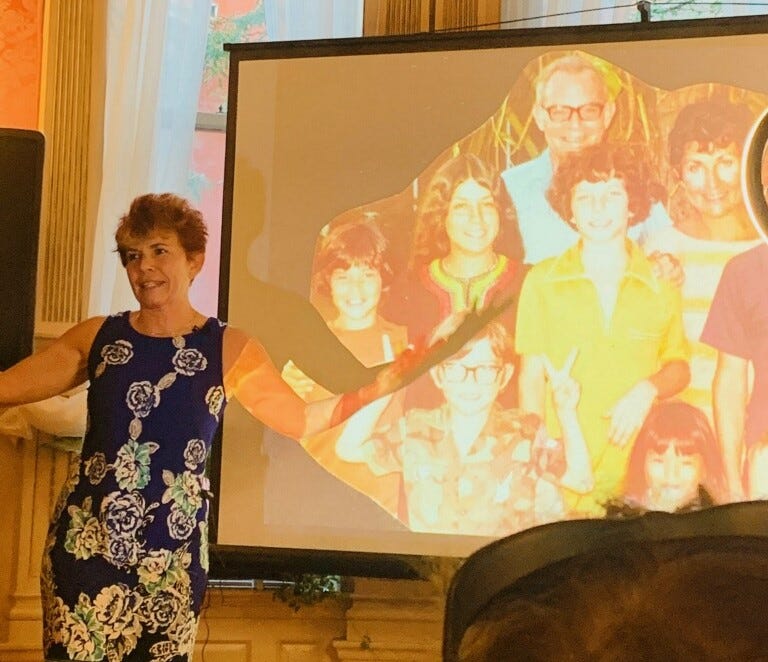
Interested in having a guest author at your book club? Karen Kaiser and I are available to visit your online meeting. Reply to this email to request more information.
“When the crowded Vietnamese refugee boats met with storms or pirates, if everyone panicked, all would be lost. But if even one person on the boat remained calm and centered, it was enough. It showed the way for everyone to survive.”
—Thich Nhat Hanh, Vietnamese Buddhist Monk (1926-2022)
The "Accord" was signed less than a year after I had returned home (from being a part of our "Vietnamization" of the war). And yes, it did provide a momentary illusion, though without the substance or backing to give it credibility. Mr. Kissinger called it "an elegant bug-out". The Accord bought the release of some of our POW's - the others, including some known to have been alive, are still unaccounted for. The Accord bought nothing for the Vietnamese people. The war was lost - over there, and in Washington and the Press - but not by the Vietnamese or the Americans who were there. What followed is well-described in books such as "For the Love of Vietnam" and "Peace and Prisoners of War" (among others). Yes, I remember. Let us never forget, or allow a repeat.
Remembering - and learning from it - is essential if we dare hope to move on and try to make this world a better place.
I was living in Brooklyn in January 1973, two and a half years since I had left Vietnam. I was still corresponding with the Vietnamese women who had worked for me in the Cam Ranh and Nha Trang libraries. I had zero trust in Nixon and Kissinger. I knew the Vietnamese were being sold down the river so that the Americans could get out and pretend it was a dignified exit—kicking the can down a very bad road. As you say, the release of the POWs was the only bright spot.